


A New Generation in a Shifting World
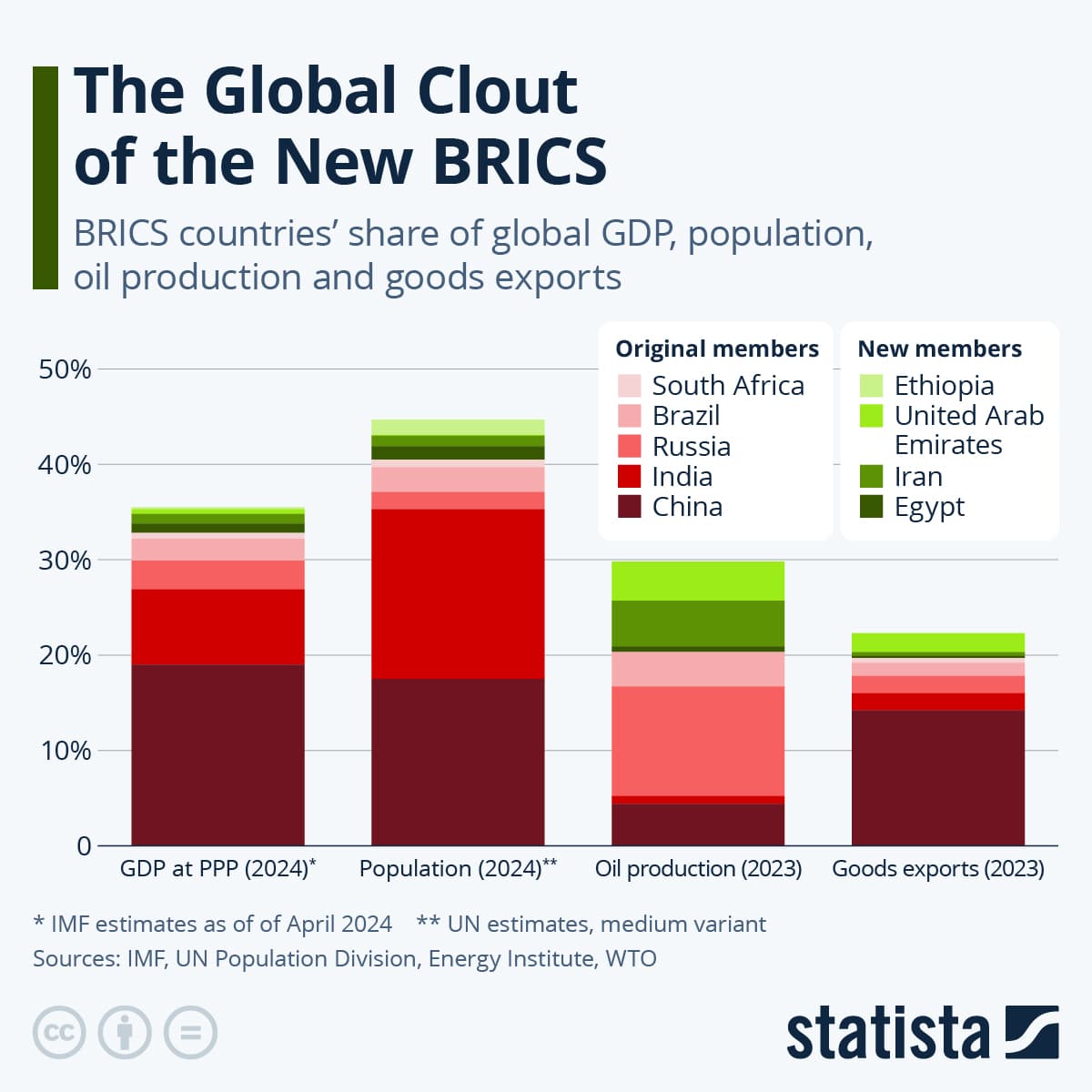
BRICS youth voices are becoming more important as the bloc expands its influence. The BRICS alliance—Brazil, Russia, China, and South Africa, now expanded with new members— Iran, Egypt, the UAE, Ethiopia, and Indonesia, has become a central player in global economic and political discussions. However, while policymakers, economists, and analysts debate strategies and reforms, a quieter but equally important conversation is emerging: what does the next generation think?
With more than half the population of BRICS nations under 35 years (aggregation of each member nations’ demographics), BRICS youth voices matter. They are the future engineers, entrepreneurs, activists, and leaders who will inherit and shape the multipolar world BRICS envisions. (UN DESA — World Population Prospects 2024 • BRICS Youth Council)
How BRICS Youth Voices Perceive Multipolarity
Many young people view multipolarity as more than a simple geopolitical concept. It represents:
- Economic Independence: Greater use of local currencies and technology could mean new business and job opportunities.
- Balance of Power and Opportunity: A system where no single country dominates, giving developing nations a stronger voice.
- Cultural and Educational Exchange: BRICS scholarships, digital platforms, and student mobility programs encourage collaboration across borders.
A recent youth dialogue hosted by the BRICS Civil Forum found that students in India and Brazil view multipolarity as a chance to diversify careers and trade ties beyond traditional Western markets.
Digital Natives and the BRICS Youth Voices Agenda
The next generation in BRICS countries is deeply connected through social media, gaming, and online education. This “digital first” mindset influences how they engage with issues like sustainability, trade, and innovation.
- Technology and Startups: Young entrepreneurs see BRICS-led funds and accelerators (e.g. New Development Bank youth programs) as platforms to build businesses.
- Social Impact: Digital campaigns around issues like food security, AI ethics, and equal access to education are gaining traction.
- Climate and Sustainability: BRICS youth movements are vocal about clean energy and climate action, pushing member states to balance growth with responsibility.
Education and Exchange: Building Bridges
Education and cultural programs are emerging as key tools to engage young people:
- Scholarship and Fellowships: China and India have expanded BRICS-funded programs to attract African and Latin American students.
- Language and Cultural Projects: Russian and Brazilian universities host cultural immersion programs, creating deeper understanding between members.
- Youth Summits: Annual BRICS Youth Summits give young professionals a seat at the table, often producing policy suggestions adopted by working groups.
What BRICS Youth Voices Want from Multipolarity
When asked what multipolarity should deliver, BRICS youth voices repeatedly emphasized:
- Access to Education and Skills: Affordable, high-quality training to compete globally.
- Fair Trade and Jobs: More equitable economic policies that create local jobs and sustainable industries.
- Voice and Inclusion: Opportunities to participate in decision-making and shape policy.
A recent ISS African Futures poll revealed that African youth see BRICS engagement as a path to new markets, tech skills, and geopolitical relevance (ISS African Futures).
The Youth Lens Matters
As BRICS redefines its role in a multipolar world, the next generation’s perspectives are essential. For young people, multipolarity is not just about power blocs but about inclusion, innovation, and opportunity.
Their voices are shaping debates on everything from AI governance to climate finance. The question for policy makers is whether these BRICS youth voices will simply echo in conference and town hall meetings, or guide the very architecture of global trade and cooperation.


